
CCTV and access control designed around what you need to see
Camera selection driven by identification distance and lighting, storage sized to your real retention requirement, and every camera commissioned with footage you have actually reviewed.
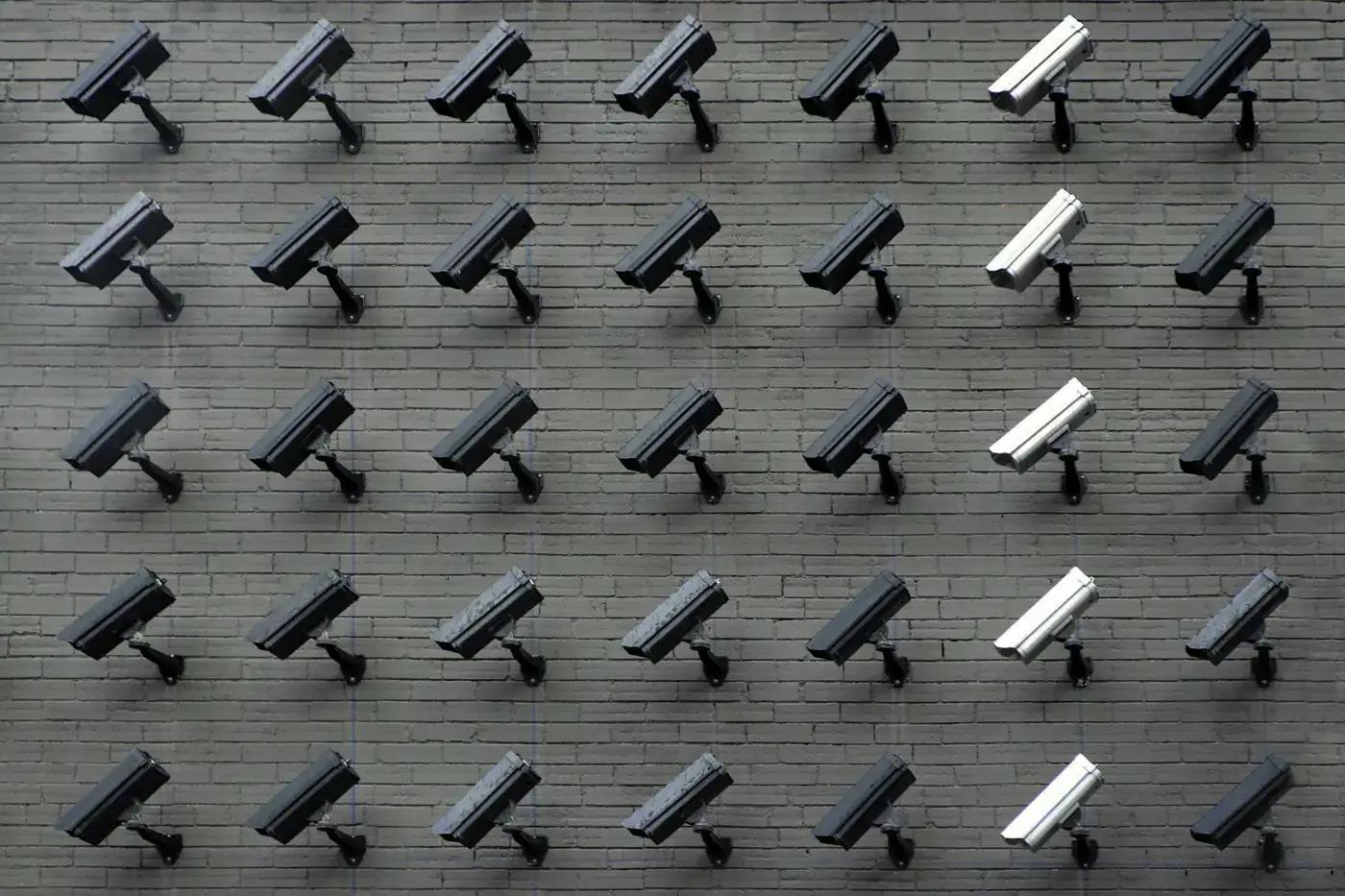
The commonest failure in CCTV across Pakistan is not a camera that stops working. It is a camera that works perfectly and produces footage that cannot identify anybody. A wide-angle lens covering an entire forecourt gives you a person-shaped blur at the gate; useful for knowing something happened, useless for knowing who. That distinction only shows up at the moment you actually need the recording, which is the worst possible time to discover it.
We design from the question backwards. What do you need this camera to achieve — detect that someone is present, recognise a person you already know, or identify a stranger from footage alone? Those three answers demand very different pixel densities on target, and therefore different lenses, different mounting distances and often a different camera count than a per-camera quotation would suggest.
Then storage is sized against your actual retention requirement rather than a round number of days. If a bank branch or a hospital needs thirty days retrievable, that is a calculation involving resolution, frame rate, compression and how much of the day each camera sees motion — not a guess. We show you the arithmetic in the quotation.
How we handle cctv & security
Designed for identification, not just coverage
Each camera position is specified against a stated objective — detect, recognise or identify — with the pixel-on-target figure that objective requires at that distance.
Storage sized to your retention period
Recording capacity calculated from resolution, frame rate, codec and motion profile so a thirty-day requirement genuinely gives you thirty days, not eleven.
Low-light performance verified on site
Night performance is where cheap cameras fail. We commission after dark as well as during the day and show you the actual footage before signing off.
Access control integrated where it makes sense
Card, PIN or biometric door control with door-forced and door-held alarms, integrated with the camera covering that door so an event brings up the footage.
Isolated on its own network segment
Cameras and recorders are placed on a dedicated VLAN with controlled routing. Surveillance equipment sitting openly on the business network is a genuine exposure.
Remote viewing configured securely
Mobile and remote access set up without exposing the recorder directly to the internet, and credentials handed over rather than left on the installer default.
From enquiry to working cctv & security
These steps are specific to security & surveillance — the survey, the checks and the commissioning differ meaningfully by category.
Objective-led site survey
We walk the site and agree, position by position, what each camera must achieve. This conversation is what separates a system that produces evidence from one that produces reassurance.
Lens, mounting and lighting plan
Focal length, mounting height and distance calculated per position, with existing lighting assessed and supplementary illumination flagged where night identification is required.
Storage and retention calculation
Recorder capacity, drive class and RAID approach sized against your retention requirement, with the calculation shown so you can check it.
Cabling and power installation
Cable routed in containment, PoE budget verified against the switch, and recorder power protected. A surveillance system that dies with the mains is not a surveillance system.
Commissioning, day and night
Every camera focused, addressed and recorded, then reviewed with you in daylight and after dark. You sign off on footage you have seen, not on a channel count.
Handover and retention review
Credentials, retention settings and export procedure documented and demonstrated, with a review after the first month to confirm retention is holding as designed.
Common problems with cctv & security — and what we do about them
These are the failures we are called in to fix. Each one is preventable at specification stage.
Footage cannot identify anybody
Each position designed against a stated identification objective with the required pixel density on target, rather than lens choice being left to whatever came in the box.
Retention silently shorter than promised
Storage calculated from real resolution, frame rate and motion profile, then verified against actual recorded data at the one-month review.
Cameras useless after dark
Night commissioning as standard and supplementary lighting quoted where identification is required in low light, instead of relying on optimistic infra-red range claims.
Recorder exposed directly to the internet
Remote access configured through a secured path with changed credentials and the recorder isolated on its own network segment.
System goes down with the power
Recorder and core cameras placed on protected power with runtime sized deliberately, so an outage does not become a recording gap.
Power continuity is part of the security specification in KPK
A surveillance system that stops recording during an outage has a gap exactly when a site is most vulnerable, and in much of KPK outages are routine rather than exceptional. We treat protected power for the recorder and core cameras as part of the base specification rather than an upsell, and where a site already has solar or inverter backup we verify how the recorder behaves through a transfer before assuming it rides through cleanly. Several systems we have been called to inspect were rebooting on every switchover without anyone realising.
CCTV & Security — questions we get asked
Specific to this service line. If yours is not covered here, ask us directly and we will answer it properly.
How much does CCTV installation actually cost in Pakistan?
Installation labour typically runs around PKR 2,500 to 5,000 per camera in the major cities, with complete entry-level analogue systems starting near PKR 68,000 and mainstream branded packages from roughly PKR 35,000 upward depending on channel count. Those figures are a starting point rather than a quote, because the variables that actually move the number are cable run lengths, whether containment already exists, mounting height and access equipment, and above all storage — a thirty-day retention requirement at high resolution can cost more than the cameras. We publish a fuller breakdown of the cost drivers in our guide to CCTV pricing.
How many cameras do we need for our premises?
Fewer than most quotations propose, if they are the right cameras in the right places. The useful method is to list the things that genuinely need to be seen — every entry and exit, the cash handling point, the stock room door, the server room, the perimeter approach — and put a camera on each with a defined objective. That usually produces a smaller, more expensive per-unit system that actually delivers evidence, rather than a large number of cheap wide-angle cameras that collectively identify nobody. For a typical single-floor commercial premises, six to twelve well-placed cameras is a common outcome.
Should we choose IP cameras or analogue for a Pakistani installation?
IP is the right default for most new installations now, because the resolution, the ability to run everything over one cabling standard, and the flexibility of PoE all favour it, and the price gap has narrowed considerably. Analogue over coax still has a genuine place in two situations: extending or partially replacing an existing analogue system where re-cabling the whole building is not affordable, and very long single runs where the coax is already in place. What we would not recommend is mixing technologies without a clear reason, because it doubles the parts you have to keep and the skills needed to maintain it.
What retention period should we specify?
It depends on how long it typically takes for an incident to come to light in your environment. Retail and cash-handling operations usually discover problems within days, so fifteen to thirty days is generally sufficient. Institutions dealing with complaints, insurance claims or regulatory matters — hospitals, schools, banks — often need sixty to ninety days because the issue surfaces weeks later. Longer retention is mostly a storage cost rather than a system redesign, so it is worth deciding deliberately at the specification stage rather than accepting whatever the recorder happens to hold.
Can you extend or upgrade a CCTV system that another company installed?
Usually yes, and we start by surveying what is actually there rather than assuming it all needs replacing. Existing coax runs, camera positions and containment often have real remaining value even where the recorder and cameras are past their useful life. We will give you an honest assessment of what is worth keeping and what is not — including telling you when a system is old enough that piecemeal extension will cost more over two years than replacing it properly, which is a conversation we have fairly often with systems installed before around 2018.
Related services
These are usually specified alongside cctv & security.
Network Equipment
Switches, routers, structured cabling and wireless — designed for the building you actually have, then labelled and documented properly.
Power & Solar Solutions
Solar, inverters, battery storage and UPS — sized against your actual load profile and tariff, with the payback arithmetic shown honestly.
Servers & Storage
Tower and rack servers, NAS and backup storage — sized honestly, racked properly, and commissioned with the power and cooling actually checked.
Sectors we supply this to
The constraints differ considerably by sector — these pages set out how.
Education
Schools, colleges and universities — computer labs, smart classrooms, campus networks and the power to keep them running.
Government & Public Sector
Departments, authorities and district offices — tender-compliant supply with the documentation, substitution justification and delivery evidence audit requires.
Banking & Finance
Branch networks, ATMs and back office — standardised rollouts, segmented networks, evidential surveillance and power that does not interrupt trading.
Book a site survey before you take a per-camera quote.
Tell us what you need to be able to see and we will walk the site, set an objective per position, and quote a system that produces usable evidence.