
Commercial solar, backup and UPS sized on your actual load
Hybrid solar, battery storage and protected power for the equipment that cannot go down — with the payback calculation shown in full, including the assumptions.
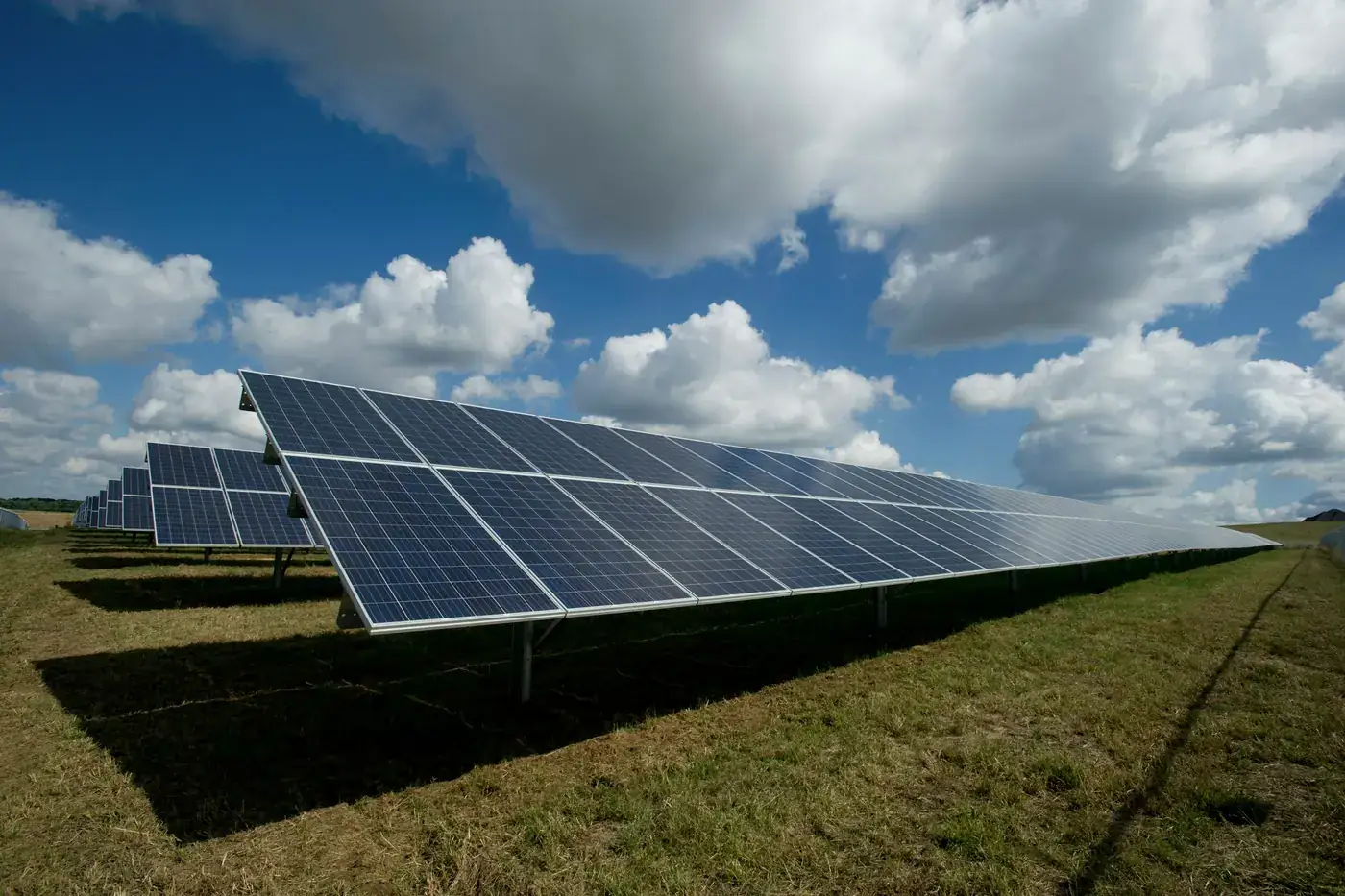
With commercial tariffs past PKR 48 per unit, solar has stopped being an environmental decision in Pakistan and become a straightforward financial one. Commercial and industrial users now account for over half of installed rooftop capacity, and the reason is arithmetic rather than idealism. But that same arithmetic is what makes bad system sizing expensive: an oversized array that exports cheaply under reduced net-metering rates, or an undersized one that leaves you on grid tariff through the afternoon peak, both waste money quietly for years.
We size against a measured load profile, not a monthly bill total. When you consume matters more than how much you consume, because self-consumption is now worth considerably more than export. A business that runs its heaviest load between nine and four gets a very different recommendation from one whose demand peaks after sunset — the second is a battery conversation, not a panel conversation.
And we cover the whole chain, because for an IT supplier that is the natural adjacency. The same site visit that sizes your array can check whether your server UPS still holds the load it was specified for, whether the recorder survives an inverter switchover, and whether your network equipment is on protected power at all. Those are the failures that take a business offline, and they are usually cheaper to fix than anyone expects.
How we handle power & solar
Sized on load profile, not bill total
We look at when you consume, not just how much. Self-consumption is worth substantially more than export under current net-metering terms, and that shifts the optimal system size.
Payback shown with its assumptions
The projection states the tariff, escalation rate, degradation and self-consumption ratio it depends on. A payback figure without its assumptions is marketing, not analysis.
Hybrid and battery storage where it earns its cost
Battery is recommended when the load profile justifies it, and not when it does not. Storage genuinely pays where evening load is high or outages are frequent — elsewhere it lengthens payback.
Structural and roof assessment first
Mounting is checked against the actual roof structure and orientation before the array is quoted, including shading survey across the day rather than a single-moment observation.
UPS and protected power for critical equipment
Servers, network core, recorders and access control placed on correctly sized UPS with runtime calculated for controlled shutdown as an absolute minimum.
Net-metering documentation supported
We prepare the technical documentation your DISCO requires for a net-metering application and stay involved through the approval process rather than handing you a folder.
From enquiry to working power & solar
These steps are specific to power & solar solutions — the survey, the checks and the commissioning differ meaningfully by category.
Load profile and tariff review
Twelve months of bills plus, where possible, an interval reading of your actual consumption pattern. Tariff slab and time-of-use position drive the entire economic case.
Roof, structure and shading survey
Available area, orientation, structural capacity and shading assessed across the day. A tree or an adjacent building that shades at 3pm changes the yield calculation materially.
System design and honest payback modelling
Array size, inverter topology and battery decision modelled against your profile, with the payback projection presented alongside the assumptions it rests on.
Installation and electrical integration
Mounting, DC and AC installation, protection devices, earthing and changeover integration carried out to standard, with the distribution board work done properly rather than improvised.
Commissioning and switchover testing
Output verified against design, and — critically for our IT customers — we test how servers, recorders and network equipment behave through an actual grid-to-inverter transfer.
Net metering and ongoing monitoring
Documentation prepared and submitted for net metering where applicable, plus monitoring configured so underperformance is visible rather than gradual and unnoticed.
Common problems with power & solar — and what we do about them
These are the failures we are called in to fix. Each one is preventable at specification stage.
System sized from the bill total alone
Sizing driven by consumption timing as well as volume, because self-consumption is now worth considerably more than export under reduced buy-back rates.
Payback projection with hidden assumptions
Every projection states its tariff escalation, degradation rate and self-consumption ratio, so you can challenge the numbers rather than take them on trust.
Battery added where it does not pay
Storage recommended only where the evening load or outage frequency justifies it. On a daytime-heavy load with a stable feed, batteries lengthen payback rather than shortening it.
Equipment rebooting on inverter switchover
Transfer behaviour tested against servers, recorders and network gear during commissioning — a failure mode that is extremely common and almost never checked.
Shading discovered after installation
Shading surveyed across the daily arc before design, not from a single site visit at one time of day.
Why we treat power and IT as one purchase in KPK
Across Khyber Pakhtunkhwa the practical constraint on IT equipment is very often not the equipment. It is whether the power behind it is stable enough for the equipment to do its job. A school with new smart boards and an unreliable feed has bought a very expensive whiteboard; a clinic with a server and no protected power has bought an unclean shutdown waiting to happen. Because we supply both sides, a single site visit can size the array, check the UPS and verify how the IT equipment behaves through a transfer — which is not something a solar contractor or an IT supplier can do alone.
Power & Solar — questions we get asked
Specific to this service line. If yours is not covered here, ask us directly and we will answer it properly.
Is commercial solar actually worth it for a business in Pakistan right now?
For most businesses with meaningful daytime consumption, yes — and the driver is tariff rather than subsidy. With commercial rates past PKR 48 per unit, every unit you generate and consume yourself displaces expensive grid power, which is why commercial and industrial users now make up more than half of Pakistan’s installed rooftop capacity. The case is weakest for businesses whose load is concentrated in the evening, and for premises with limited or heavily shaded roof area. We will model your specific case and tell you if the answer is no, because a badly matched system damages our reputation more than a declined order does.
Do we need batteries, or is a grid-tied system enough?
Batteries solve two distinct problems and it is worth being clear which one you have. If your issue is outages — you need equipment to keep running through load-shedding — then storage is doing a resilience job and the value is obvious. If your issue is economics, batteries let you shift daytime generation into evening consumption, which now matters more than it did because export rates have been reduced and self-consumption is worth more than sale. If neither applies, a grid-tied system without storage will give you a shorter payback, and we will say so.
How does net metering work and will you handle the application?
Net metering lets you export surplus generation to your DISCO and receive credit against future consumption, under the NEPRA framework, with systems commonly ranging from small domestic installations up to around 25 kW for commercial premises. We prepare the technical documentation the application requires — system design, equipment certification, single-line diagram — and stay engaged through the approval and meter-change process rather than handing you a folder and wishing you luck. Timelines vary considerably by DISCO and region, and we will give you a realistic expectation for your area rather than a best case.
Can you integrate solar with our existing UPS and server equipment?
Yes, and this is genuinely where being an IT supplier rather than purely a solar installer makes a practical difference. The failure we see most often on sites that have added solar is equipment rebooting on every grid-to-inverter transfer, because nobody tested the switchover against sensitive loads. We check transfer time against what your servers, recorders and network hardware actually tolerate, and where there is a mismatch we resolve it with a double-conversion UPS on the critical branch rather than hoping the inverter is fast enough.
What maintenance does a commercial solar installation need?
Less than people expect, but not zero — and in Pakistan the dominant factor is dust. Panel soiling in this climate can reduce output noticeably between cleanings, particularly through the dry months, so a cleaning schedule matters more here than in wetter climates. Beyond that, an annual inspection covering mounting integrity, DC connector condition, protection devices and inverter health is sensible. We configure monitoring at commissioning so gradual underperformance is visible in data rather than discovered when someone eventually compares a bill to last year.
Related services
These are usually specified alongside power & solar.
Servers & Storage
Tower and rack servers, NAS and backup storage — sized honestly, racked properly, and commissioned with the power and cooling actually checked.
Security & Surveillance
CCTV, access control and monitoring — designed around what you actually need to see, with storage sized for the retention period you require.
Network Equipment
Switches, routers, structured cabling and wireless — designed for the building you actually have, then labelled and documented properly.
Sectors we supply this to
The constraints differ considerably by sector — these pages set out how.
Education
Schools, colleges and universities — computer labs, smart classrooms, campus networks and the power to keep them running.
Healthcare
Hospitals, clinics and diagnostic centres — clinical workstations, records infrastructure, protected power and surveillance that meets safeguarding needs.
Corporate & SME
Growing companies and established businesses — office fit-outs, equipment refreshes, network builds and the support arrangement that follows.
International Organizations
UN agencies, INGOs and donor-funded programmes — supply timed to the grant calendar and specified for the partner who inherits it at project close.
Send twelve months of bills and we will model it properly.
We will size the system against your consumption pattern, survey the roof, and give you a payback projection with every assumption stated so you can challenge it.