
IT supply, installation and support for growing businesses
New office fit-outs, fleet refreshes and network builds — with one supplier accountable for the equipment, the installation and what happens afterwards.
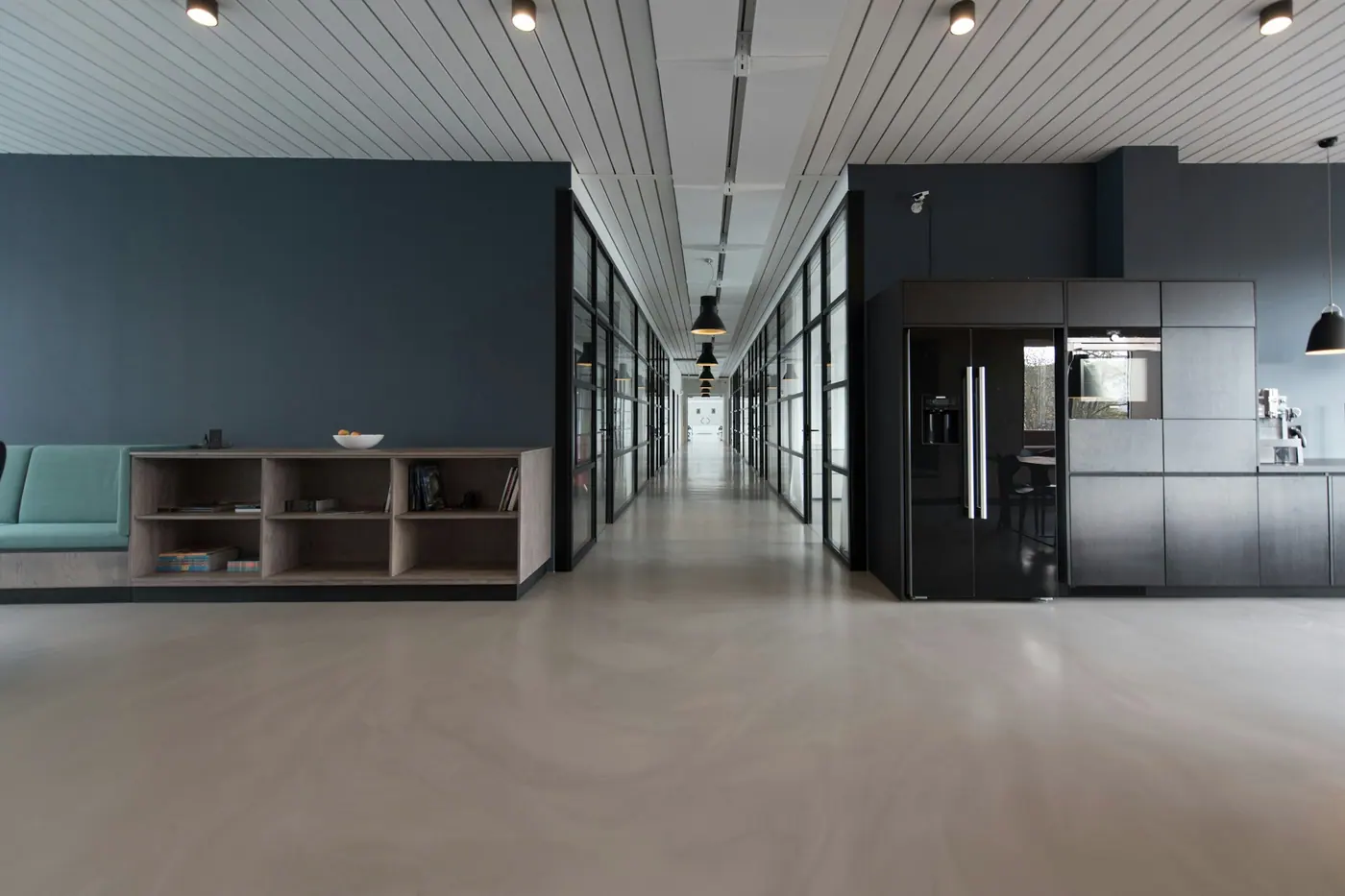
Most companies between roughly ten and two hundred staff in Pakistan are in an awkward position: too large to buy equipment from a retail shop and treat failures as somebody’s afternoon, too small to employ the kind of IT function that manages vendors properly. The result is usually a scatter of suppliers — one for laptops, another who did the cabling three years ago and is no longer reachable, a third for the cameras — and nobody with an overall picture when something stops working.
The practical value we offer this segment is singular accountability. One supplier who specified the equipment, installed it, holds the documentation and answers the phone when it fails. That is worth more than a marginal saving on any individual purchase, because the cost of a fragmented estate is not visible in the purchase price — it shows up as the two days somebody spends working out who installed what.
This sector also has the sharpest need for honest sizing. A growing business is genuinely uncertain about what it will need in two years, which makes it easy to sell either far too much capacity now or something that has to be replaced within eighteen months. We would rather specify for a realistic horizon and be explicit about what the expansion path looks like and what it will cost, so a decision made today does not become an expensive surprise later.
What corporate & sme buyers actually order
Drawn from what this sector requests most, and why the specification differs from a general commercial buyer.
Staff laptops and desktops
Specified per role rather than uniformly, because paying workstation prices across an entire office is the most common budget waste we see.
Office networking and WiFi
Structured cabling, managed switching and business wireless — usually the foundation everything else depends on and the thing most often done badly.
A file server or NAS
Typically the first server a growing company buys, and typically bought without a tested restore path until something goes wrong.
Office CCTV and access control
Entrances, server room and any cash or stock handling area, with retention set against how quickly issues surface in the business.
UPS and, increasingly, solar
With commercial tariffs past PKR 48 per unit, solar has become a straightforward financial decision for businesses with daytime load.
Printers and consumables on standing supply
Removes the recurring administrative overhead of raising a purchase order every time a cartridge runs out.
What goes wrong for corporate & sme buyers
Each of these describes what actually happens, why it damages trust, and what we do differently.
A fragmented estate nobody has a picture of
Equipment accumulates from four or five suppliers over several years, with no documentation, no labelling and no record of what was installed when or by whom.
When something fails, diagnosing it starts with archaeology rather than troubleshooting, and each supplier reasonably points at somebody else’s work.
We document what we install and, for account customers, will audit and document what is already there. A rack diagram, an asset register and a port schedule cost one engineer-day and save many.
Sized for today, replaced in eighteen months
A growing company buys a switch, a server or a wireless setup sized exactly for current headcount, then outgrows it before the equipment is anywhere near end of life.
The business concludes it was mis-sold, when in reality nobody asked what the growth plan was — but the outcome and the cost are the same.
We ask about hiring plans and expansion before specifying, size for a realistic horizon, and state explicitly what the expansion path is and what it will cost, so the decision is informed rather than optimistic.
No support arrangement once the installation ends
The installer completes the work, invoices, and the relationship effectively ends. Six months later a failure means starting a supplier search from scratch.
The business has no continuity of knowledge about its own infrastructure, and the eventual replacement supplier prices in the time it will take to understand what is there.
Warranty administration is handled by us rather than passed to a manufacturer helpline, and optional AMC cover provides defined response commitments and scheduled maintenance rather than ad-hoc call-outs.
What a business fit-out usually looks like
A representative new-office project starts with a floor plan and a headcount, ideally before the fit-out contractor has finished, because getting containment and outlet positions right during the build is dramatically cheaper than retrofitting afterwards. We plan outlet positions and the comms location, specify switching and wireless against headcount and expected growth, and identify which equipment needs protected power. Machines are imaged before delivery so the office is workable on day one rather than during the first fortnight, and the handover includes the documentation the business will need when it eventually engages anyone else.
This describes how a representative project in this sector runs. It is not a client case study — we do not publish attributed project details without written permission, and we do not publish unattributed ones at all.
What you get from us
- Cabling and outlet positions planned during fit-out, not retrofitted after
- Switching and wireless sized against a stated growth expectation, with the expansion path priced
- Machines imaged and asset-tagged before delivery so day one is workable
- Rack diagram, port schedule and asset register handed over as standard
- Optional AMC with defined response commitments rather than ad-hoc call-outs
What we supply to corporate & sme
Listed in the order this sector typically requests them.
Computers & Laptops
Desktops, laptops and workstations sourced against your actual workload, imaged and asset-tagged before they reach your team.
DetailsNetwork Equipment
Switches, routers, structured cabling and wireless — designed for the building you actually have, then labelled and documented properly.
DetailsPower & Solar Solutions
Solar, inverters, battery storage and UPS — sized against your actual load profile and tariff, with the payback arithmetic shown honestly.
DetailsSecurity & Surveillance
CCTV, access control and monitoring — designed around what you actually need to see, with storage sized for the retention period you require.
DetailsServers & Storage
Tower and rack servers, NAS and backup storage — sized honestly, racked properly, and commissioned with the power and cooling actually checked.
DetailsPrinters & Scanners
Office and high-volume printing, scanning and document capture — specified on cost per page, with consumables you can actually keep buying.
DetailsPricing for corporate & sme
Business quotations separate equipment, installation labour and any ongoing support arrangement so each can be evaluated on its own terms, and so an equipment purchase is never bundled with a support commitment you did not ask for. Where a growth path exists — additional switch capacity, extra access points, more storage — we state what that expansion will cost at the time of the original quotation, so the decision you make today includes the cost of the decision you will make in two years.
For KPK businesses, solar and IT are now one conversation
With commercial tariffs past PKR 48 per unit and commercial and industrial users now accounting for more than half of Pakistan’s installed rooftop solar capacity, most businesses in Peshawar and across KPK are evaluating solar and IT refresh in the same budget cycle. Treating them as one project rather than two produces a materially better outcome: the same site visit sizes the array, checks whether the UPS still holds the load it was specified for, and verifies that servers and network equipment survive an inverter switchover cleanly. That last check is the one almost nobody runs, and it is where a surprising number of unexplained reboots originate.
Corporate & SME — questions we get asked
Specific to this sector's constraints, not general enquiries.
We are moving to a new office. When should we involve you?
As early as possible, ideally while the fit-out is still at the planning stage. The cost difference between running cable and containment during a fit-out and retrofitting it into a finished office is substantial, and the same applies to power provision for a comms rack and protected circuits. If you bring us in when the floor plan exists but before partitions go up, we can specify outlet positions, comms room location and circuit requirements as part of the build. Bringing an IT supplier in after the office is finished routinely adds cost and produces visible trunking that nobody wanted.
How often should a business replace staff laptops?
Four to five years is a realistic cycle for most office roles in Pakistan, and the constraint is usually battery and support availability rather than processing performance. What we would push back on is replacing an entire fleet at once, which creates a large capital event and then repeats it — a rolling replacement of a quarter of the estate each year is easier to budget and keeps the average age sensible. The exception is where a fleet was bought as a single batch and is now all failing together, in which case staged replacement over two years is usually the pragmatic recovery path.
Do we need a server, or is cloud storage enough?
For many businesses under about thirty people with reliable connectivity, cloud services genuinely cover the requirement and a server is unnecessary capital. Where an on-premises server still earns its cost is when you have large working files that are painful to move over your connection — design, video, CAD, imaging — when connectivity is unreliable enough that cloud-only would stop work, or when there are specific data residency or application requirements. We will give you the honest comparison rather than defaulting to hardware, because selling you a server you do not need is a poor foundation for a longer relationship.
What does an AMC actually cover, and is it worth it for a small business?
An annual maintenance contract typically covers scheduled preventive maintenance, defined-response remote and on-site support, warranty administration handled on your behalf, and firmware and health checks on network and server equipment. Whether it is worth it depends less on your size than on your tolerance for downtime — a business that can absorb a day without its network probably does not need one, while a business that cannot almost certainly does. For companies with no internal IT staff at all, the more valuable component is often simply having a defined route to someone who already knows your infrastructure rather than the response times themselves.
Can you take over supporting equipment another company installed?
Yes, and we start by documenting what is actually there, because in most cases nobody has. That audit — tracing and labelling cabling, recording the switch and server configuration, building an asset register, identifying what is still under warranty — typically takes an engineer a day or two for a small office and is the single most useful thing you can do for your own resilience. We will also tell you frankly what is genuinely fine and should be left alone, because a takeover that begins with a recommendation to replace everything is a sales exercise rather than an assessment.
Other sectors we supply
Where we cover
Working in corporate & sme? Tell us your constraints.
Send the requirement and the things that limit it — access windows, budget release schedule, documentation your process needs. We will quote against both.